

10 Best Data Analytics Certifications in 2026
You're probably researching data analytics certifications because you know they could advance your career. But choosing the right one is genuinely frustrating. Dozens of options promise results, but nobody explains which one actually matters for your specific situation.
Some certifications cost $100, others cost $600. Some require three months, others require six. Ultimately, the question you should be asking is: which certification will actually help me get a job or advance my career?
This guide cuts through the noise. We'll show you the best data analytics certifications based on where you are and where you're heading. More importantly, we'll help you determine which certification aligns with your specific situation.
Table of Contents
- All 10 Certifications at a Glance
- Best Certifications for Breaking Into Data Analytics
- Best Certifications for Proving Tool Proficiency
- Best Certifications for Advanced and Specialized Roles
- How to Choose the Right Data Analytics Certification
- Starting Your Certification Journey
- Frequently Asked Questions
All 10 Certifications at a Glance
Before we get into how to choose, here's the full lineup side by side. Costs, timelines, and renewal terms below were checked against official provider pages; jump to any row's full review further down for the details.
| Certification | Cost | Time | Level | Expiration | Best For |
|---|---|---|---|---|---|
| Dataquest Data Analyst | $245–$392 | 8 months | Entry | Permanent | Hands-on learners, portfolio builders |
| Google Data Analytics | $147–$294 | 3–6 months | Entry | Permanent | Complete beginners |
| IBM Data Analyst | $150–$294 | 4 months | Entry | Permanent | Python seekers |
| Meta Data Analyst | $147–$245 | 5 months | Entry | Permanent | Business analytics |
| Microsoft PL-300 | $165 | 2 wks–6 mo | Intermediate | Annual (free) | Power BI specialists |
| Tableau Desktop Foundations | $75 | 3–6 weeks | Entry | Lifetime | Tableau beginners |
| Tableau Certified Data Analyst | ~$250 | 2–4 months | Advanced | 2 years | Senior Tableau users |
| Alteryx Designer Core | Free | 1–2 months | Intermediate | 2 years | Data prep automation |
| CompTIA Data+ | ~$255 | 2–3 months | Foundational | 3 years | Vendor-neutral baseline |
| CAP (Expert tier) | $495–$695 | Variable | Expert | 3 years | Senior/leadership analysts |
Best Certifications for Breaking Into Data Analytics
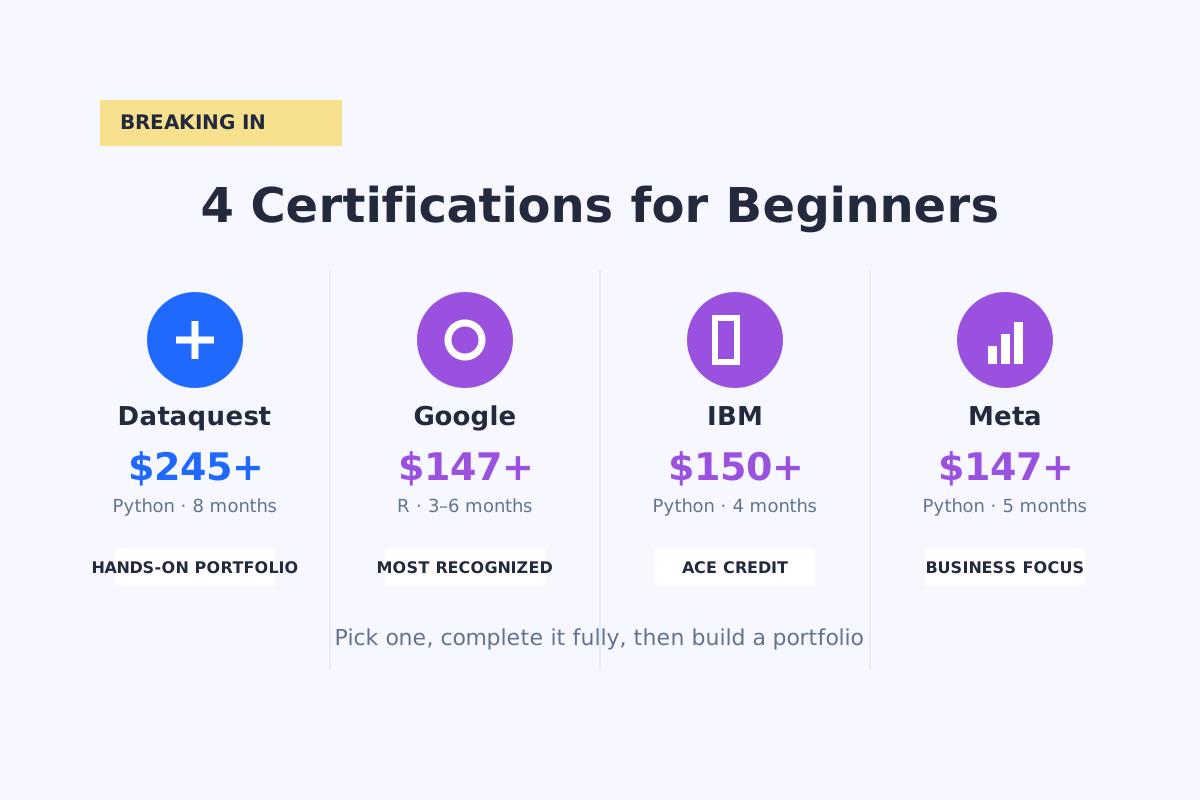
The certifications below help you build foundational skills and credibility while pursuing your first data analytics role.
1. Dataquest Data Analyst in Python Path

Dataquest's career path teaches data analytics by having you build real projects with real datasets, in your browser, from the first lesson.
- Cost: $49/month; free plan available. Total cost typically runs $245–$392 depending on pace and any current promotions.
- Time: 8 months at 5 hours per week.
- Prerequisites: None. Starts from absolute zero.
- What you'll learn: Python, SQL, pandas and NumPy for cleaning and analysis, data visualization, statistics fundamentals, and the command line, Git, and API basics.
- What this actually gets you: 19 finished projects you can walk an interviewer through in detail, not just a line that says you took a course. That's the thing people on hiring-side forums say they actually look for, more than the credential name itself.
- Expiration: None. Permanent credential.
- Industry recognition: Over 440,000 learners enrolled. The completion certificate itself isn't as instantly recognizable as Google or IBM's brand name, but the portfolio of real projects demonstrates actual competency in a way a certificate alone can't.
- Best for: Self-motivated learners who want hands-on practice with real data, people who learn better by doing than by watching lectures, and anyone who wants a portfolio built in as they learn.
Dataquest's project-based approach means you're building portfolio pieces as you learn, not after you finish. When you complete the path, you have both a certificate and tangible proof of your capabilities. Many learners complete a Dataquest path first, then add a traditional certificate like Google's or IBM's for brand-name recognition on top.
Worth knowing: This is a structured learning path with a completion certificate, not a proctored exam. Some employers specifically ask for certifications from Google, IBM, or Microsoft by name. In practice, your portfolio projects usually matter more than the certificate brand when it comes to proving you can actually do the work.
2. Google Data Analytics Professional Certificate
Google's Data Analytics Professional Certificate is one of the most widely enrolled beginner-level routes into data analytics, with more than 3.7 million enrolments on Coursera.
- Cost: $49 per month after a seven-day free trial in the United States and Canada. Prices may be lower in some other countries. Google states that most learners can complete the programme for under $300.
- Time: Approximately six months at ten hours per week. The programme is self-paced, so learners who study more frequently may finish sooner.
- Prerequisites: None. It is explicitly designed for beginners with no previous degree or professional experience in data analytics.
- What you'll learn: Spreadsheets, SQL, Python, pandas, NumPy, Tableau, data cleaning, data analysis, data visualization, presentations and data storytelling.
- AI content: The programme includes practical instruction on using AI to support data cleaning, organization, formulas, questioning and visualization. It also includes a course on using tools such as Gemini to improve résumés, organize a job search and prepare for interviews.
- Certificate: Graduates receive a shareable Google Professional Certificate that can be added to a résumé or LinkedIn profile. It is a course-completion credential rather than a proctored professional examination.
- Industry connections: Graduates in the United States can apply for opportunities with Google and a consortium of more than 150 employers, including Deloitte, Target and Verizon. Similar employer consortiums are available in selected countries, although participating employers vary by location.
- Best for: Complete beginners, career changers who want a clearly structured programme, and learners who value a widely recognized company name on their résumé.
The certificate provides more than 180 hours of instruction, practice-based assessments and a capstone case study that learners can share with potential employers. Its combination of introductory technical instruction, career preparation and Google branding makes it a strong starting point for people entering analytics.
Worth knowing: Earlier versions of the certificate taught R, but the current programme teaches Python instead. It covers Python fundamentals, pandas and NumPy, although learners seeking deeper programming and a larger collection of portfolio projects may still need additional practice after completing the certificate.
3. IBM Data Analyst Professional Certificate

IBM's certificate is a beginner-friendly programme with a strong focus on Python, SQL, spreadsheets, dashboards and practical projects.
- Cost: Paid Coursera subscription; also included with Coursera Plus. Pricing varies by country and plan.
- Time: About four months at ten hours per week.
- Prerequisites: None.
- What you'll learn: Excel, SQL, Python, pandas, NumPy, Jupyter Notebooks, Cognos, Tableau, APIs, web scraping, and data visualization.
- AI content: The 11-course programme includes a generative AI module for analysis, visualization and career preparation.
- Projects: Includes practical labs, applied projects, and a final capstone. Graduates also receive an IBM digital badge.
- Academic credit: Recommended for up to 12 US college credits and six ECTS credits, subject to institutional approval.
- Enrolment: More than 558,000 learners.
- Best for: Beginners who want substantial Python practice and exposure to a broad range of analytics tools.
IBM covers more technical ground than many introductory programmes, especially in web scraping, APIs, regression and Python visualization.
Worth knowing: Google's current certificate also teaches Python, so IBM is no longer the only Python-focused option. The two programmes overlap, and most beginners will benefit more from choosing one and building additional projects than from completing both.
4. Meta Data Analyst Professional Certificate
Meta's certificate combines technical analytics skills with a strong focus on business questions, decision-making and data management.
- Cost: Paid Coursera subscription; pricing varies by country and plan.
- Time: About five months at ten hours per week.
- Prerequisites: None. Designed for beginners.
- What you'll learn: SQL, Python, pandas, Google Sheets, Tableau, statistics, hypothesis testing, regression, the OSEMN framework and data governance.
- Projects: Includes hands-on projects and a portfolio for demonstrating practical skills.
- Enrolment: More than 64,000 learners.
- Best for: Beginners interested in business, marketing or general data-analytics roles.
Meta places particular emphasis on using data to answer organisational questions, measure performance and support business decisions.
Worth knowing: The certificate is newer and less widely enrolled than the Google and IBM alternatives, so its recognition may still be developing. Its combination of Python, statistics, business metrics and data governance nevertheless makes it a credible beginner option.
Best Certifications for Proving Tool Proficiency
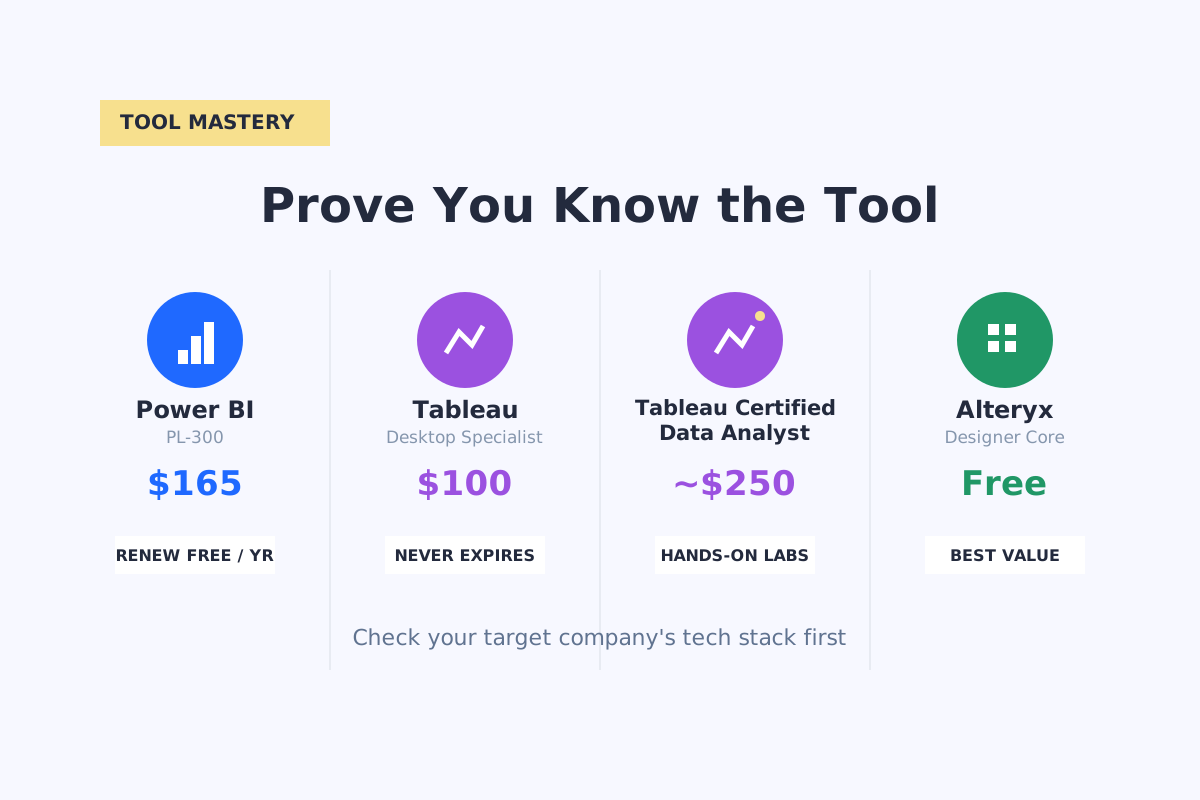
Once you understand analytics fundamentals, you'll often need to validate your expertise with the specific platforms your target employers actually use.
5. Microsoft Certified: Power BI Data Analyst Associate (PL-300)
The PL-300 certification validates practical skills in preparing, modelling, visualizing and securing data with Microsoft Power BI.
- Cost: Exam pricing varies by country; the US price is typically $165.
- Time: A few weeks for experienced Power BI users; several months for beginners.
- Prerequisites: No formal prerequisites, but proficiency with Power Query, DAX and data modelling is expected.
- Exam coverage: Data preparation (25–30%), data modelling (25–30%), visualization and analysis (25–30%), and Power BI management and security (15–20%).
- Current content: The exam includes newer Power BI and Microsoft Fabric features such as DirectLake, Copilot and semantic models.
- Expiration: 12 months, with free renewal through an online Microsoft Learn assessment.
- Exam format: Proctored exam with 100 minutes of assessment time. A score of 700 or more is required to pass.
- Best for: Power BI developers, business intelligence analysts and professionals working in Microsoft-based environments.
PL-300 is more directly job-focused than a general course-completion certificate because it assesses skills in a specific business-intelligence platform.
Worth knowing: The credential is specific to Power BI. Its data-modelling and visualization concepts transfer to other tools, but the certification itself will be most valuable where Power BI is used. Dataquest's Business Analyst with Power BI path teaches Excel, SQL and Power BI through 10 projects, although learners should compare its syllabus carefully with the latest PL-300 study guide.
6. Tableau Desktop Specialist
This entry-level certification validates foundational knowledge of Tableau Desktop and basic data-visualization skills.
- Cost: Check the current Trailhead Academy registration page, as exam pricing can vary by location.
- Time: Several weeks of preparation for learners with basic Tableau experience.
- Prerequisites: None formally required, although familiarity with Tableau Desktop is helpful.
- What it covers: Connecting and preparing data, creating visualizations, applying filters and calculations, and building basic dashboards.
- Current name: Previously known as Tableau Desktop Specialist; it is now Salesforce Certified Tableau Desktop Foundations.
- Level: Foundational.
- Best for: Tableau beginners who want formal validation of their basic skills.
The certification can strengthen an entry-level résumé, but it demonstrates foundational knowledge rather than advanced analytical ability.
Worth knowing: Older job listings and study materials may still use the name "Tableau Desktop Specialist." Learners seeking more advanced recognition can later consider the Salesforce Certified Tableau Data Analyst credential.
7. Tableau Certified Data Analyst
This intermediate-to-advanced certification proves you can do sophisticated work in Tableau, including advanced calculations and complex dashboards.
- Cost: ~$250 for the exam.
- Time: 2–4 months of preparation with hands-on practice.
- Prerequisites: Tableau recommends six months of hands-on experience with the tool.
- What you'll learn: Advanced data preparation with Tableau Prep, Level of Detail (LOD) expressions, complex table calculations, publishing and sharing content, and advanced dashboard design.
- What's new: The exam includes hands-on lab components where you actually build visualizations under time pressure, not just answer questions about them.
- Expiration: Two years. You retake the exam to renew.
- Exam format: Roughly 65 questions including 8–10 hands-on labs, about 105 minutes total.
- Industry recognition: Highly valued for Tableau-focused roles, particularly senior analyst and consulting positions.
- Best for: Experienced Tableau users, senior analyst or BI roles, and consultants who work across multiple client environments.
The hands-on lab component sets this apart from multiple-choice-only exams. Employers know you can actually build things in Tableau, not just answer questions about it.
Worth knowing: At roughly $250 with a two-year renewal cycle, this is one of the pricier tool certifications here, and Tableau explicitly recommends real experience first. If you're newer to the tool, start with Desktop Specialist above.
8. Alteryx Designer Core Certification
The Alteryx Designer Core certification validates foundational skills in preparing, combining and analysing data with Alteryx Designer.
- Cost: Free.
- Time: Around four to eight weeks of preparation, depending on previous experience.
- Recommended experience: Approximately three months of regular Alteryx Designer use.
- What it covers: Workflows, data input and output, preparation, formulas, transformations, joins, unions and workflow documentation.
- Exam format: Open-book, with 80 multiple-choice and scenario-based questions completed within two hours.
- Expiration: Two years. Renewal requires retaking the free exam.
- Best for: Analysts who regularly clean, combine and automate data from multiple sources.
Because the exam is open-book, preparation should focus on building workflows and applying tools rather than memorising the interface.
Worth knowing: Alteryx focuses mainly on data preparation and workflow automation, while Power BI and Tableau focus more heavily on reporting and visualization. The certification is useful in organisations that use Alteryx, but its value is more specialised than broader Power BI or Tableau credentials. Access can also be a challenge because Alteryx Designer generally requires a paid licence after any available trial or educational access ends.
Power BI vs. Tableau vs. Alteryx: Which Should You Choose?
Check your target company's tech stack first. Power BI tends to dominate in Microsoft-centric organizations and corporate environments already running Office 365. Tableau tends to dominate in tech companies, startups, and consulting firms that adopted data visualization early. Alteryx tends to show up in consulting, healthcare, and financial services organizations with heavy data-blending needs.
If you're still not sure, start with Power BI. It has more job postings overall and a lower certification cost. You can add Tableau or Alteryx later if your career requires it.
Best Certifications for Advanced and Specialized Roles
If this section is for you, you're not learning analytics basics anymore — you're advancing your career strategically. These certifications serve a different purpose than entry-level credentials.
9. CompTIA Data+
CompTIA Data+ is a vendor-neutral certification aimed at early-career analysts who want a tool-agnostic credential.
- Cost: ~$255 for the exam.
- Time: 2–3 months of preparation.
- Prerequisites: None required; CompTIA recommends 18–24 months of prior exposure to databases, analytical tools, and basic visualization.
- What you'll learn: Data concepts and environments, data mining, data analysis, visualization, and data governance and quality.
- What's new: A new exam version (DA0-002) launched in late 2025, requiring a passing score of 720 out of 900, up from the prior version's 675.
- Expiration: Three years, renewed through CompTIA's continuing education program.
- Exam format: Up to 90 questions in 90 minutes, mixing multiple-choice and performance-based items.
- Industry recognition: Recognized as a tool-agnostic baseline credential, useful when your target role isn't tied to one specific BI platform.
- Best for: Analysts who want a vendor-neutral credential that doesn't lock them into one software ecosystem.
Because Data+ doesn't test any single vendor's tool, it holds up even if you switch platforms later in your career. It's a reasonable middle ground between a beginner's professional certificate and a fully tool-specific exam.
Worth knowing: Data+ is less specific than PL-300 or the Tableau exams, which cuts both ways. It won't prove you can operate one particular dashboard tool, but it won't go stale if your employer changes software either. Check whether your target job postings actually mention it before prioritizing it over a tool-specific credential.
10. Certified Analytics Professional (CAP)
CAP is often called the "gold standard" for senior analytics professionals. It's expensive and has strict requirements.
- Cost: $495–$695 total, including a non-refundable $55 application fee, with exam fees of $440 (INFORMS members) or $640 (non-members).
- Time: Preparation varies based on experience. This isn't a typical study-for-three-months certification.
- Prerequisites: A master's degree with 2 years of analytics experience, a bachelor's with 4 years, or 8 years of experience with any level of education, plus agreement to INFORMS's Code of Ethics.
- What you'll learn: The full analytics lifecycle — business problem framing, analytics problem framing, data sourcing, methodology selection, model building, deployment, and lifecycle management.
- What's new: INFORMS restructured this credential in 2025 into three tiers — CAP-Essentials, CAP-Pro, and CAP-Expert — replacing the older CAP/aCAP system. The details above describe CAP-Expert, the most demanding tier.
- Expiration: Three years, with recertification requirements.
- Exam format: 100 scored multiple-choice questions plus unscored pretest items, completed in 3 hours.
- Industry recognition: Prestigious among analytics professionals, less known outside specialized analytics roles, but highly respected within the field.
- Best for: Senior analysts with significant experience, and people seeking credentials for leadership or consulting positions.
CAP demonstrates you understand analytics as a business function, not just a set of technical skills. It signals strategic thinking and end-to-end expertise. If you're competing for director-level analytics positions, CAP adds prestige.
Worth knowing: With the 2025 restructure, make sure you're applying for the tier that actually matches your experience. CAP-Expert has the strictest prerequisites and highest cost. Given the requirements, this isn't a certification to pursue early in your career.
How to Choose the Right Data Analytics Certification
Now that you've seen the options, here's how to actually narrow them down to the one that fits you.
Match Your Current Situation
Be honest about where you're starting. Are you completely new to analytics? Transitioning from an adjacent field? Already working as an analyst?
Complete beginners need fundamentally different certifications than experienced analysts. If you've never worked with data, jumping straight into an advanced, exam-based tool certification won't help you get hired. Start with a program that builds the underlying foundation first.
If you're already working with data, you can skip the basics and pursue certifications that validate specific tool expertise or add credibility for senior roles.
Consider Your Career Goal
Different certifications serve different purposes. Start by identifying the scenario that best describes your goal:
- I want to break into analytics and land my first data role. Look for comprehensive programs that teach both concepts and practical skills. These build credibility when you don't yet have professional experience.
- I'm already working in analytics and need to prove I know a specific tool. Shorter, tool-focused certifications work better here. Companies frequently name tools like Power BI or Tableau explicitly in job postings.
- I lead analytics work without doing the hands-on analysis myself. Vendor-neutral, business-focused certifications demonstrate strategic thinking rather than technical execution.
Evaluate Practical Constraints
Consider your budget realistically, including renewal fees over time. Entry-level certifications typically run $150 to $300 total. Advanced, experience-gated certifications can cost significantly more.
Think about your available time honestly. If you can dedicate five hours a week, a 100-hour certification means 20 weeks of commitment. Can you sustain that pace alongside work?
Check what your target employers actually value. Look at job postings for roles that interest you and note which certifications, if any, get mentioned by name.
Starting Your Certification Journey
You've seen the options. You understand what matters. Now it's time to act.
Start by choosing a certification that matches your current situation. If you're breaking into analytics with no experience, start with Dataquest for hands-on skills or Google/IBM for brand recognition. If you need to prove tool proficiency, choose Power BI, Tableau, or Alteryx based on what your target employers use. If you're advancing to senior roles, pick the specialized, vendor-neutral certification that aligns with your career trajectory.
Complete your chosen certification thoroughly, don't rush through just to finish. The learning matters more than the credential itself.
Build 2–3 portfolio projects that demonstrate your skills. Where certifications validate your knowledge, projects prove you can apply it to real problems. Then start applying to jobs before you feel completely ready — the job market will teach you which skills and credentials actually matter for your target roles.
Frequently Asked Questions
Are data analytics certifications worth it?
It depends on your situation. Certifications help most when you're breaking into analytics, need to prove tool skills, or work in credential-focused industries. They help least when you already have strong experience and a solid portfolio.
For complete beginners, certifications provide structured learning and credibility. For current analysts, tool-specific certifications can open doors to specialized roles, but additional credentials provide diminishing returns once you have two or three plus a strong portfolio.
Which data analytics certification is best for beginners?
For hands-on learners who want a portfolio, Dataquest's Data Analyst path provides project-based learning with real datasets. For brand recognition, Google Data Analytics or IBM Data Analyst are the stronger picks, depending on whether you want to learn R or Python.
Don't pursue multiple overlapping beginner certifications. Pick one, complete it thoroughly, then focus on building portfolio projects that demonstrate your skills.
Should I get Google or IBM's certificate?
Choose Google if you want the most recognized name and a gentler learning curve. Choose IBM if you want to learn Python specifically or prefer deeper technical content. You don't need both — the time you'd spend on a second certificate is usually better invested in portfolio projects.
Can I get a job with just a data analytics certification?
Rarely. Certifications get your resume past initial screening and give you talking points in interviews, but portfolio projects, communication skills, and problem-solving ability are usually what actually get you hired.
Plan to combine any certification with 2–3 strong portfolio projects using real datasets, plus consistent networking. Certifications help, but connections and demonstrated work carry more weight.
Do employers actually care about data analytics certifications?
Some do, especially for entry-level roles and for tool-specific credentials that show up explicitly in job postings, like Power BI's PL-300. For senior positions, certifications matter less than what you've actually accomplished.
Industry matters too — government, finance, and healthcare tend to value credentials more than tech startups do. Check job postings in your target field to see what actually matters for your situation.
How much do data analytics certifications cost?
Entry-level certificates typically cost $147–$392 total. Tool certifications range from free (Alteryx) to about $250 (Tableau Certified Data Analyst). Vendor-neutral, experience-based credentials cost more — CompTIA Data+ runs about $255, while CAP totals $495–$695 including its application fee.
Factor in renewal costs too: Tableau's Certified Data Analyst and CAP both require paid renewal every two to three years, while Tableau Desktop Foundations and Alteryx Designer Core don't expire or renew for free.
Are bootcamps better than certifications?
Bootcamps offer more depth and structure but cost 10 to 20 times more — typically $8,000–$15,000 versus $100–$400 for most certifications. Bootcamps work well if you need external structure, deadlines, and instructor support. Certifications work well if you're self-motivated and budget-conscious.
A motivated person with a certification plus a strong portfolio can compete effectively against bootcamp graduates. Choose based on your learning style and budget, not just the price gap.
